Bichon Frise

A small companion dog with a white curly coat. Loose hair can remain within the coat, so grooming needs planning. Low shedding does not establish that a dog is suitable for a person with pet allergies.

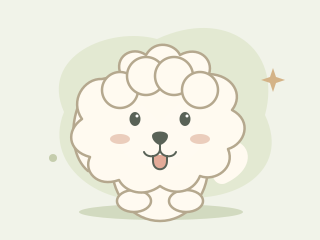
Bichon Frise · Illustration
Illustration
Weight
5–8 kg
Lifespan
14–15 years

Weight and lifespan are reference ranges from the breed guide. They vary by sex, lineage and individual dog and do not predict your dog’s ideal weight or lifespan. Read the care descriptions alongside the individual dog’s history.

A companion-dog background

The FCI presents the Bichon Frise as a Franco-Belgian companion dog with a small frame and white curls. That background does not tell you that every Bichon welcomes strangers or struggles when alone. Observe the individual rather than treating a reputation as a prediction.

Shedding and allergy are different questions

The AKC explains that shed hair can remain in a Bichon’s undercoat and needs brushing out. “Never sheds” is therefore misleading. The AAAAI explains that pet allergens occur in dander, saliva and urine, and does not recognise a truly hypoallergenic dog breed. Discuss a family member’s allergies with their clinician rather than selecting solely by coat type.

Care between grooming appointments

Coat length and tangling affect the work needed at home. Ask the groomer which brush to use, where tangles are forming and how to handle areas the dog finds difficult. Missing a few days does not by itself determine that shaving is necessary. Avoid forceful brushing that scratches the skin.

Observe activity and time alone

A burst of running does not demonstrate that a particular exercise quota was missed. Match activity to age and health, and record what actually happens during absences. If barking or chewing becomes a problem, note its context and onset for a veterinary consultation and seek behavioural support when appropriate.

Budget for people as well as appointments

Plan who will brush the coat, allow time for comfortable handling and identify a backup carer. Record an actual grooming quote and proposed appointment interval, including whether the price changes with coat length or matting. This makes the care plan specific to your household.
Breed comparison

Sources

  1. FCI — BICHON A POIL FRISE (215) (BICHON FRISE)

    Standard for breed identity, origin, appearance and classification. Check the relevant size or coat variety where several share a standard.

    Breed name and source URL checked:

  2. FCI — Bichon Frise — English breed standard

    Standard for breed identity, origin, appearance and classification. Check the relevant size or coat variety where several share a standard.

    Breed name and source URL checked:

  3. RSPCA — Caring for your dog — individual exercise needs

    General guidance for assessing an individual dog and your circumstances; not a breed standard.

    Breed name and source URL checked:

  4. RSPCA — Understanding your dog’s behaviour

    General guidance for assessing an individual dog and your circumstances; not a breed standard.

    Breed name and source URL checked:

  5. American Kennel Club — Bichon Frise: coat care

    General guidance for assessing an individual dog and your circumstances; not a breed standard.

    Breed name and source URL checked:

  6. AAAAI — Pet Allergy

    General guidance for assessing an individual dog and your circumstances; not a breed standard.

    Breed name and source URL checked:

  7. American Kennel Club — Bichon Frise — health, grooming and recommended tests

    Organisation profile covering breed characteristics and care topics; not individual veterinary or feeding advice.

    Breed name and source URL checked:

  8. The Royal Kennel Club — Bichon Frise — pre-breeding health screening

    Organisation profile covering breed characteristics and care topics; not individual veterinary or feeding advice.

    Breed name and source URL checked:

  9. Royal Veterinary College (VetCompass) · Canine Genetics and Epidemiology — The epidemiology of patellar luxation in dogs attending primary-care veterinary practices in England

    General guidance for assessing an individual dog and your circumstances; not a breed standard.

    Breed name and source URL checked:

  10. OFA — Patellar Luxation

    General guidance for assessing an individual dog and your circumstances; not a breed standard.

    Breed name and source URL checked:

  11. Journal of Veterinary Internal Medicine — Epidemiologic evaluation of calcium oxalate urolithiasis in dogs in the United States: 2010-2015

    General guidance for assessing an individual dog and your circumstances; not a breed standard.

    Breed name and source URL checked:

  12. Cornell University College of Veterinary Medicine — Struvite bladder stones in dogs

    General guidance for assessing an individual dog and your circumstances; not a breed standard.

    Breed name and source URL checked:

  13. Royal Veterinary College (VetCompass) — New VetCompass publication: Epidemiology of canine hyperadrenocorticism in the UK

    General guidance for assessing an individual dog and your circumstances; not a breed standard.

    Breed name and source URL checked:

  14. Cornell University College of Veterinary Medicine — Cushing's syndrome

    General guidance for assessing an individual dog and your circumstances; not a breed standard.

    Breed name and source URL checked:

Content updated:

How to read our sources and review status

This information is general guidance and does not replace veterinary care. If your dog has swallowed something, contact a veterinarian immediately.