Puli
A Hungarian herding dog wrapped in self-forming cords. Almost nothing lands on your floor, but the coat is a lifelong project and the dog under it needs a real job every day.
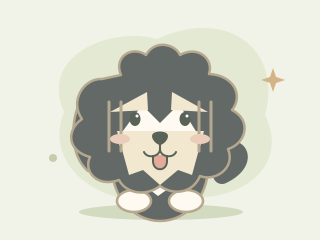
- Weight
- 10–15 kg
- Lifespan
- 10–15 years
Weight and lifespan are reference ranges from the breed guide. They vary by sex, lineage and individual dog and do not predict your dog’s ideal weight or lifespan. Read the care descriptions alongside the individual dog’s history.
Background and characteristics
The Puli worked sheep on the Hungarian plains for centuries, and the job selected for one trait above all: quick independent judgement. A Puli reads a situation and commits to it rather than waiting for instruction. That makes for a fast, funny, opinionated dog who learns new behaviour in a handful of repetitions and then improvises on it.
It also means a bored Puli invents work, and the work it invents is usually barking.
Exercise and play
Budget an hour a day, minimum. Two brisk walks are a floor, not a ceiling. What actually satisfies this breed is movement with direction changes in it — herding lessons, agility, flyball, or a serious game of fetch on grass — plus ten or fifteen minutes of scentwork or trick training indoors.
Owners who supply the physical half and skip the mental half end up with a dog that patrols the windows.
Coat and everyday care
The coat is the real decision. The cords are not styled in; the soft undercoat and harsher outer coat tangle together on their own, and from roughly eight to twelve months your job is to pull the felting mats apart by hand so they set as separate cords rather than one mat. You do not brush a corded Puli.
Bathing an adult is an all-day commitment even with a stand dryer, and a cord that stays damp will sour and set up a skin infection. Plenty of experienced owners in warm climates keep the dog clipped short year-round, which is a legitimate choice rather than a failure. Before you buy, ring your groomer and ask whether they handle corded coats at all — many have never touched one.
Health considerations
Health points to raise with a breeder: hip dysplasia, luxating patellas, and progressive retinal atrophy. Ask for hip and eye clearances. Because hair covers the eyes, owners often notice vision changes late, so part the coat and look regularly.
Home environment and care planning
Housing-wise, a Puli fits a flat or a small house perfectly well if the exercise happens. The thing that gets you a complaint from neighbours is noise, not size. Teach an interrupt cue for barking from the first week.
In hot, humid summers, remember that a full corded coat insulates: walk early and late, and check for heat stress well before the dog looks distressed. This is a rare breed in the US and the UK, so expect a waiting list and a long conversation with the breeder rather than a quick purchase.