Acorn
CautionAcorns bring two problems: gallotannins that irritate the gut into vomiting and diarrhea, and a hard smooth shape that can obstruct the intestine of a small dog. Fall walks under oak trees are the exposure.
This food guide has not been reviewed by a veterinarian. It summarises general information from sources and should not be used to decide whether a food is suitable for an individual dog or to assess an emergency.
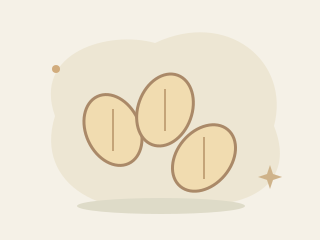
Check before feeding
Check the precautions before sharing
Risk depends on preparation, ingredients or amount. Read the precautions below; body weight alone cannot establish a safe portion.
Signs and health concerns
This list includes both observable signs and conditions identified through examination or testing. It cannot establish the cause or whether an exposure is safe.
- Vomiting
- Diarrhoea
- Abdominal pain
- Loss of appetite
- Lethargy
- Intestinal blockage
- Retching without bringing anything up
- Constipation
- Broken tooth
More about this food
Acorns are a chemistry problem and a plumbing problem at the same time. The ASPCA lists gallotannin as the toxic principle for oak (Quercus spp.) and notes in the same entry that acorns can obstruct the digestive tract. Tannins are the astringent compounds that make an unripe acorn pucker your mouth; they irritate the gut lining and bind proteins. A dog that has hoovered up a pile of them typically shows vomiting, diarrhea, abdominal pain, poor appetite, and lethargy. Worth knowing: the ASPCA's toxicity rating on that entry is written for horses, and serious oak poisoning is mostly a cattle and horse problem. In dogs, GI upset and obstruction are the realistic risks.
Obstruction is where small dogs get hurt. An acorn is hard and slick, so it often goes down whole, and for a 10 to 15 lb dog it is the right size to lodge at the pylorus or in the small intestine — more so if the cap and a few twigs went down with it. The Merck Veterinary Manual treats GI obstruction as an emergency, with anorexia, regurgitation, vomiting, diarrhea, lethargy, or shock depending on location and duration. Repeated retching that brings up nothing, a painful belly, or no stool for a couple of days is not a wait-and-see situation. Cracked carnassial teeth from crunching shells are common enough to check for too.
The season is short and predictable. From September through November, the ground under every oak in the park, the backyard, and the sidewalk strip is covered. Dogs that graze while walking and dogs that treat an acorn like a tiny ball are the ones who end up at the clinic. A short leash and a route that avoids oaks beats any amount of after-the-fact management. Skip moldy acorns entirely, and remember that squirrel caches concentrate them in one spot your dog will find.
If your dog swallowed acorns whole or ate a real quantity, note how many, how big, and when, then call your veterinarian or the ASPCA Animal Poison Control Center at (888) 426-4435. Do not induce vomiting at home — a hard object coming back up can lodge in the esophagus.
Frequently asked questions
- My dog swallowed one acorn on a walk. Is that an emergency?
- For a large dog, one acorn usually passes in the stool. For a 10 lb dog it is big enough to obstruct, so call your vet with your dog's weight and the acorn's size. Go in immediately for repeated retching, a tense painful belly, or no bowel movement.
- He ate a whole pile of them under the oak tree.
- Quantity turns this from a nuisance into a real GI problem, both from tannins and from bulk. Call your veterinarian or the APCC at (888) 426-4435 now with an estimate of how many. Do not make him vomit at home; hard objects can lodge in the esophagus on the way up.
- Are acorn caps and shells a problem, or just the nut?
- Caps, shells, and twigs are the pieces most likely to cause a blockage, since none of them digest. They also crack teeth. Check for a broken tooth if your dog chewed hard, and call your vet if vomiting or diarrhea keeps repeating.